Skyrim, the Holidays, and the Comfort of Returning
This Blog is also available in video form: https://www.youtube.com/watch?v=W3YGY55gPwA
Oftentimes, during the holiday season, I go back and play Skyrim. I return and embark on a sort of in-game pilgrimage, taking me from Riverwood to Whiterun and, on occasion, even Solitude or the Rift. Yet, despite it being a single-player experience, it is a journey I do not take alone. According to Steam charts, the game's player base has had a slow but gradual increase from the beginning of October to early December. A decade and change after release, people are still returning in droves. But why? Why, after so many years, is Skyrim still beloved? And why do so many people keep coming back to it during the fall and holiday seasons?
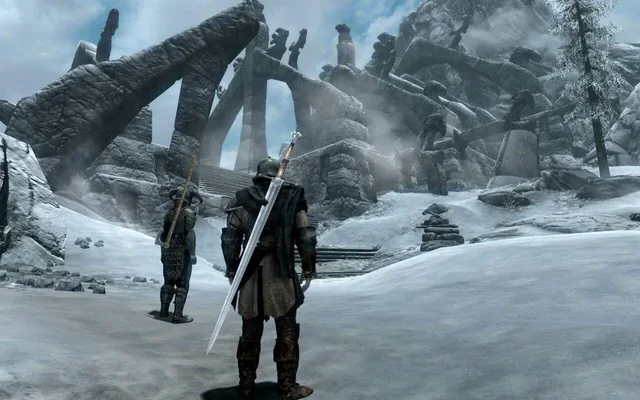
The holidays often makes us think of our childhood. But this does not explain why Skyrim is so nostalgic.
One answer is nostalgia, of course, a desire to return to times that are simpler. Times before the bills and the health insurance and the other nagging complexities of adulthood took up permanent residence in the back of our minds. But in this case, I think there’s a bit more to it than that.
So let’s talk a bit about black magic:
Black Magic
All designers know that there is at least a small amount of “black magic” to game design— the part of the craft where you’re flying by instinct alone.
In one of my older blogs, I tried to understand what made Skyrim so well-loved, by me and others. I hypothesized on some ideas, mostly revolving around the obvious: the soundtrack, the world, the exploration, the ambience, etc. All of those things are certainly reasons that the game holds such a key place in many players’ hearts. But I think there is something else too, an intangible of some sort. Some people refer to this “something” as: “Bethesda Magic” (which is a particular variety of black magic), and avid players of these games will typically know what that refers to even if they can’t put words to it. It’s the game’s secret sauce. And guessing at that secret sauce’s recipe can be a bit of a fool's errand.
But I am nothing if not a fool.
Words of a Fool
A few weeks ago, I came across a video called What’s on the edge of Skyrim? by one of my favorite game design adjacent YouTubers, Any Austin. One of the reasons I enjoy watching him is that he sees games differently than textbooks, journalists, and even designers do. He has an innate ability for sussing out the aforementioned black magic in games.
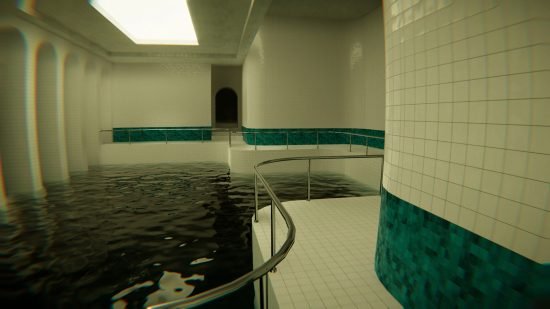
Liminal Space Game: POOLS
In this video, he makes many interesting points relevant to level, game, and narrative design. He talks about the importance of quiet and empty space in game worlds, the places between the game’s design. The blank spots sandwiched in the middle of quests and POIs and the liminal beauty they often hold. This sort of thing has actually become a popular topic of pop culture discussion under the concept of liminal spaces, though the concept has long predated the term. And, if I may digress further, it strikes me as similar to Pixar’s “emotional contrast” principles in telling stories, except here it’s more of a “spatial contrast,” a common level-design and architectural technique applied at a “world design” scale.
Yet there was a section later in the video that really struck me. And I’m going to take the time and write the whole thing out just because I think there is so much to be learned from it.
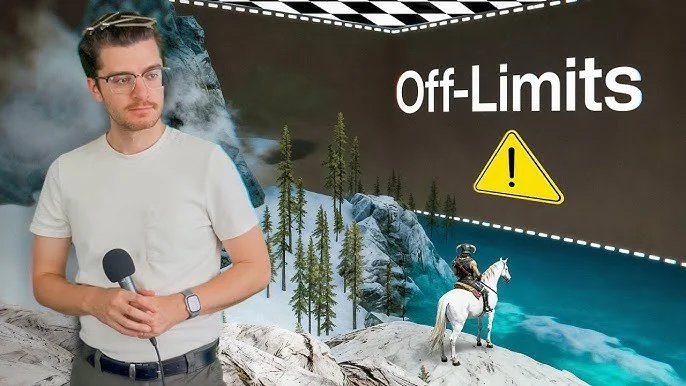
Thumbnail from quoted video.
“In places where it’s really snowy and the music hits just right, it feels just like the holidays to me. I know everyone has a ‘holidays thing,’ some piece of media to consume around that time. And to me, I’m unsure of what it is until I sit back down and play Skyrim.”
“And I don’t even necessarily just mean like cozy or nostalgic. I actually kind of mean like spiritually meaningful, almost religious-ish.”
“A big part of this is just the aesthetic, the music, the northern lights, the snow, the setting, the burning fires, the cozy inns. The melancholy loneliness of it all. Skyrim is silly, video games are silly, but it never stops surprising me how, when I’m not looking, they somehow sneak into my brain and take a seat right next to my biggest feelings.”
“And it always kinda happens without me knowing, which is a way that I think games are super different from other forms of art, where you’re always kind of aware of how they’re affecting you right when they are.”
Those paragraphs led me to a sort of AHA moment. (I dropped everything I was doing to write this). I’ve watched long, meandering video essays about Skyrim and read countless articles, too, but there always seemed to be a piece of the puzzle left out. Yet, it was this little quote that struck the right match and finally gave me an answer as to what that “Black magic” was.
Get To The Point, Sam.
I’ve teased long enough, so here it is: The reason Skyrim and similar games (Elden Ring, The Witcher, etc.) are so powerful is that they allow you to make memories; they do so in a way that other, more linear games and things like books or movies do not. Certainly, you remember the end of Arthur Morgan, or what happened to Joel, or Kratos and Atreus’ story. But those are prescribed memories. They are given to you. Only when a game truly embraces freedom and throws caution to the wind do you, the player, have the room to make these memories yourself. I still remember my first journey to Bleak Falls Barrow all those years ago, just as vividly as some of the hikes I’ve taken in the real world. And that’s because it was a discovery, a discovery I made and therefore a memory I created in a game, not one the game created for me.
And with self-created memories comes meaning. Therein lies its magic. It is how certain video games sneak in and “take a seat” next to our biggest feelings.
Of course, many of those Skyrim memories, such as the journey to Bleak Falls Barrow or the troll on the way to High Hrothgar, are carefully designed. So, I’m not suggesting that the key to good game design is, in fact, a lack of design. Quite the contrary.
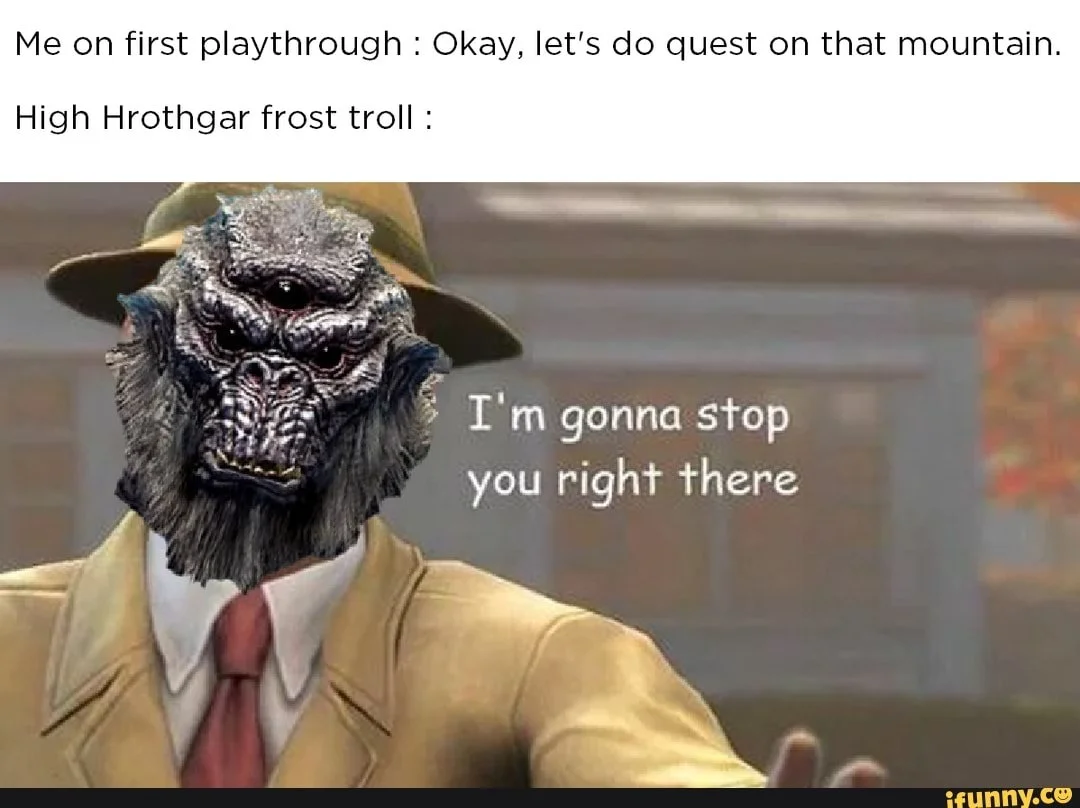
Troll in suit
The trick and maybe the black magic of the thing is to guide the player just enough to allow them room to make the memory themselves while not suffocating them with control.
Total freedom alone isn’t enough either. Sandbox survival games, for example, offer near-complete freedom, but often lack the worldbuilding, simulation and emotional context that makes those moments stick.
But how?
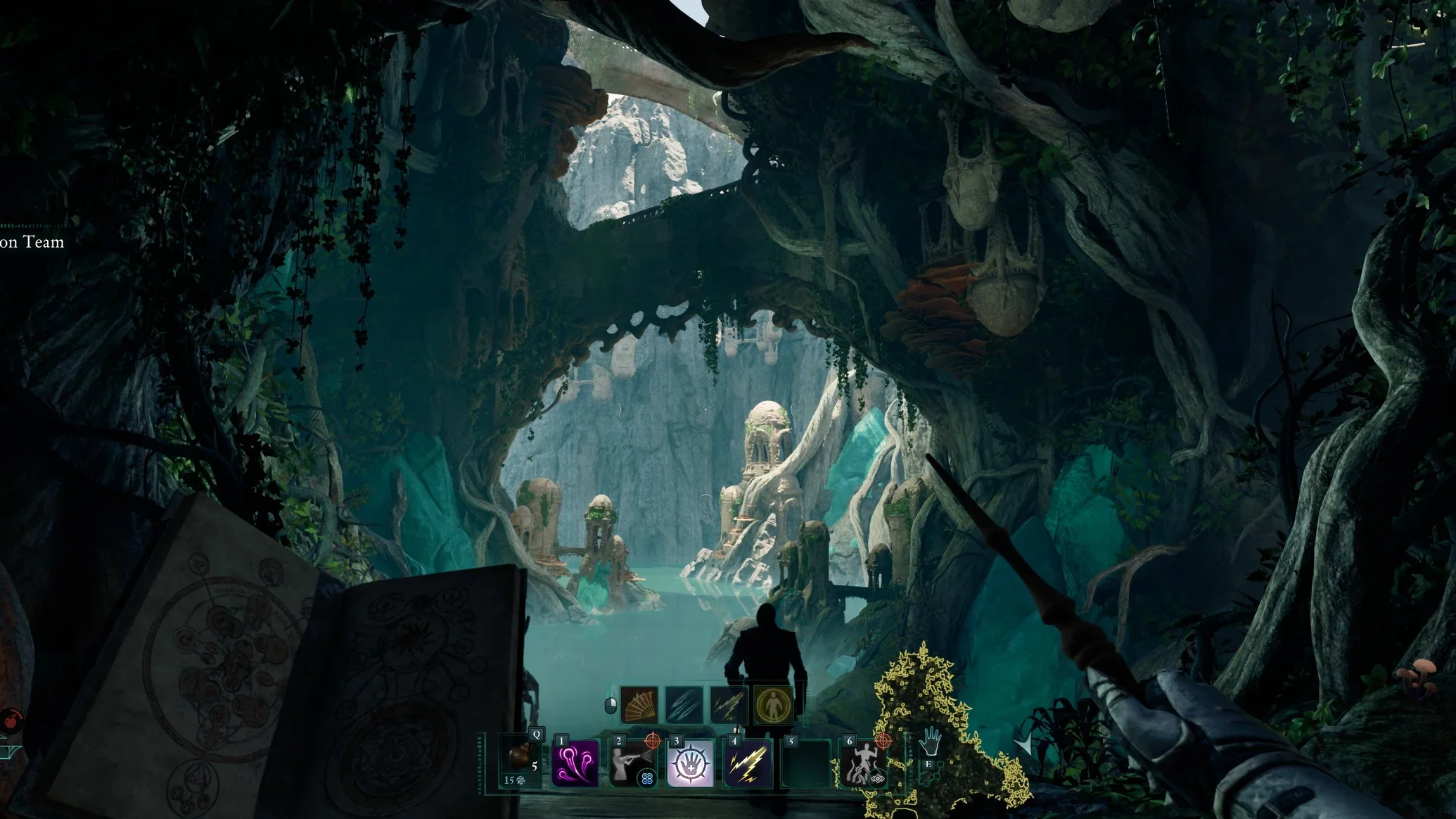
Screenshot from Avowed
Skyrim and Bethesda magic rides that line perfectly and, in all honesty, is probably some witch's cocktail of open world design experience, raw instinct, polish (in the Game feel sense), and potentially some amount of luck. I believe that Avowed also gets this right, sometimes to a greater degree than Skyrim, though it stumbles in other areas (exposition dumping). The point is these moments are often carefully crafted, but they still make the player feel as if they are making a unique memory, and sometimes, the player actually is.
Here is a relevant excerpt from the book Game Feel on this:
“It is in the polish that much of the impression of a physical reality different from our own exists. With that comes the sense of possibility and wonder that attracts so many to games as a medium. In a few minutes spent feeling their way around, players can extrapolate a universe of possible interactions… and, in doing so, can experience a great joy of discovery and learning that is rarely possible in everyday life.”
Why now?
So why the holidays then? I’m not sure I have the perfect answer. People, of course, make memories and meaning in real life. And people especially form lasting memories during times like the holidays, even more so during childhood. Which I think is why people return to games like Skyrim and Minecraft so often during this time of year. Because, unlike real life, where you cannot revisit those moments and see the same smiling face at the dinner table or your old elementary school classroom, in games, you can.
And that’s special. Really special. It is something no other medium or art form can provide, not to the same degree. In a way, as Austin mentions, it’s sort of spiritual. Even early game theorists like Johann Huizinga considered playgrounds sacred places, not unlike churches. And what is a game like Skyrim if not a big digital playground?
In the age of infinite, easily obtainable information, wonder has become increasingly difficult to come by. Skyrim, and games in general, remain a haven for an emotion as rare as gold, and that’s what makes them special. I would encourage you to experience them and create them for others, whenever possible.
Video games are awesome, and talking about them is awesome, and making them is awesome. Thanks for reading, happy holidays. And, if you need me I’ll be in Whiterun.
— Sam