Deadlocks Subtle & Brilliant Writing (And How They Do It.)
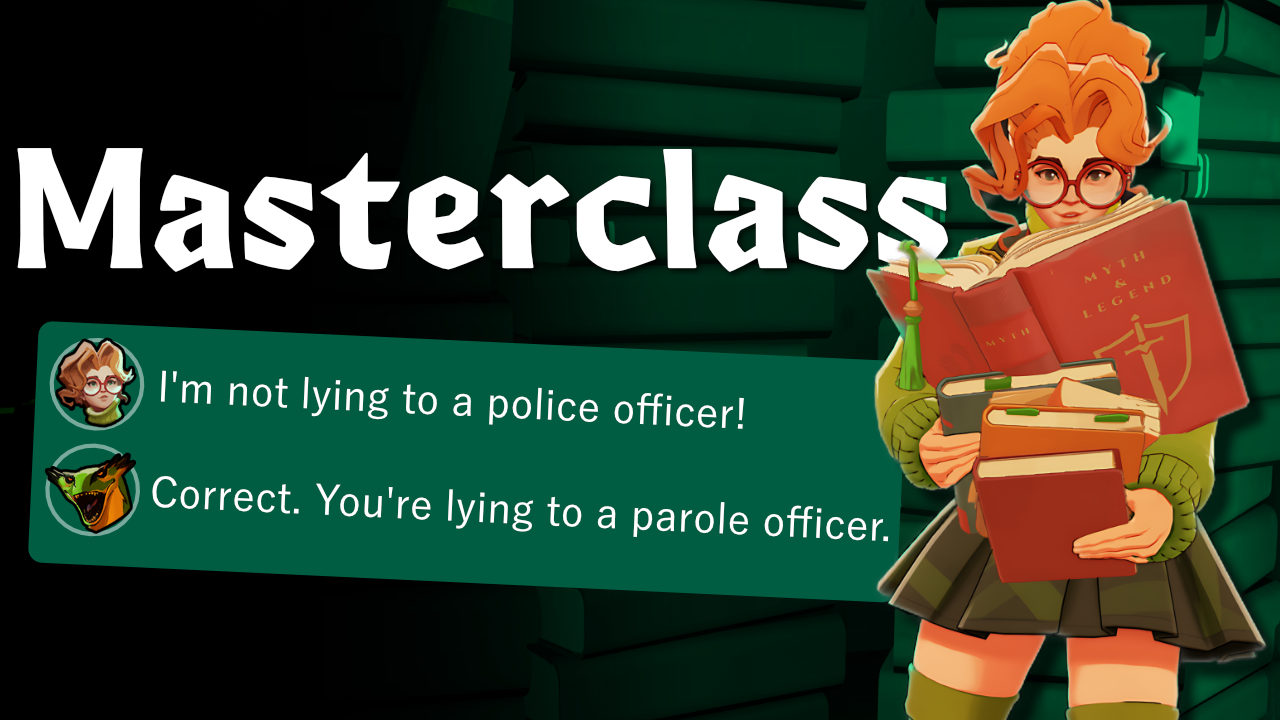
BEFORE READING!!!! I highly recommend watching this blog as a video, as it shows examples of in-game conversations (and is well edited, imho).
Open
I love playing games. If you asked me what my favorite games were, I would tell you story-driven RPGs. And that’s true. But they aren't my most played games. No, in my proverbial gaming bedroom, filled with high-brow Witcher paraphernalia and dusty Meridia’s beacons, there is a closet. And inside that closet are hero shooters.
Many nights, my friends and I throw ourselves into the endless buzzsaw of sweaty gamers who are much better than us, taking the time to actually practice and improve exclusively at gunpoint or under threat of death.
Hero shooters, or, more broadly, hero games (MOBAs, BRs, etc.), share one thing in common. They all have Heroes (or champions, or agents, or [insert legally distinct noun]). These characters differ greatly in design, with unique gameplay capabilities and roles, as well as varied personalities and voices.
I’ve played most of them at one point or another. Sometimes for ten hours and sometimes for a number of hours that I am embarrassed to admit. But my most recent obsession is Deadlock. And my permanent obsession is game writing. So let’s talk about the juncture of those two things.
Deadlock's approach to character writing is immediately noticeable. Its character barks are quippy but avoid the Marvel cringe, an impressively thin line to walk; its side characters, like the urn and the shopkeeper, are fun yet grounded in the world, and its flavor text— oh my god, its flavor text.
But I’ll come back to that at the end of this blog.
Chapter 1: Dirt & Character Design
While I’m waiting to respawn after getting steamrolled by a fed Haze, I’ve had plenty of time to consider the game's characters, and I’ve decided I’m drawn to them because they are dirty and grungy; their personalities are covered in scrapes and bruises and mud, in a way that feels more realistic than their stylized exteriors. They are imperfect. Humanly flawed while still shouldering highly saturated personalities.
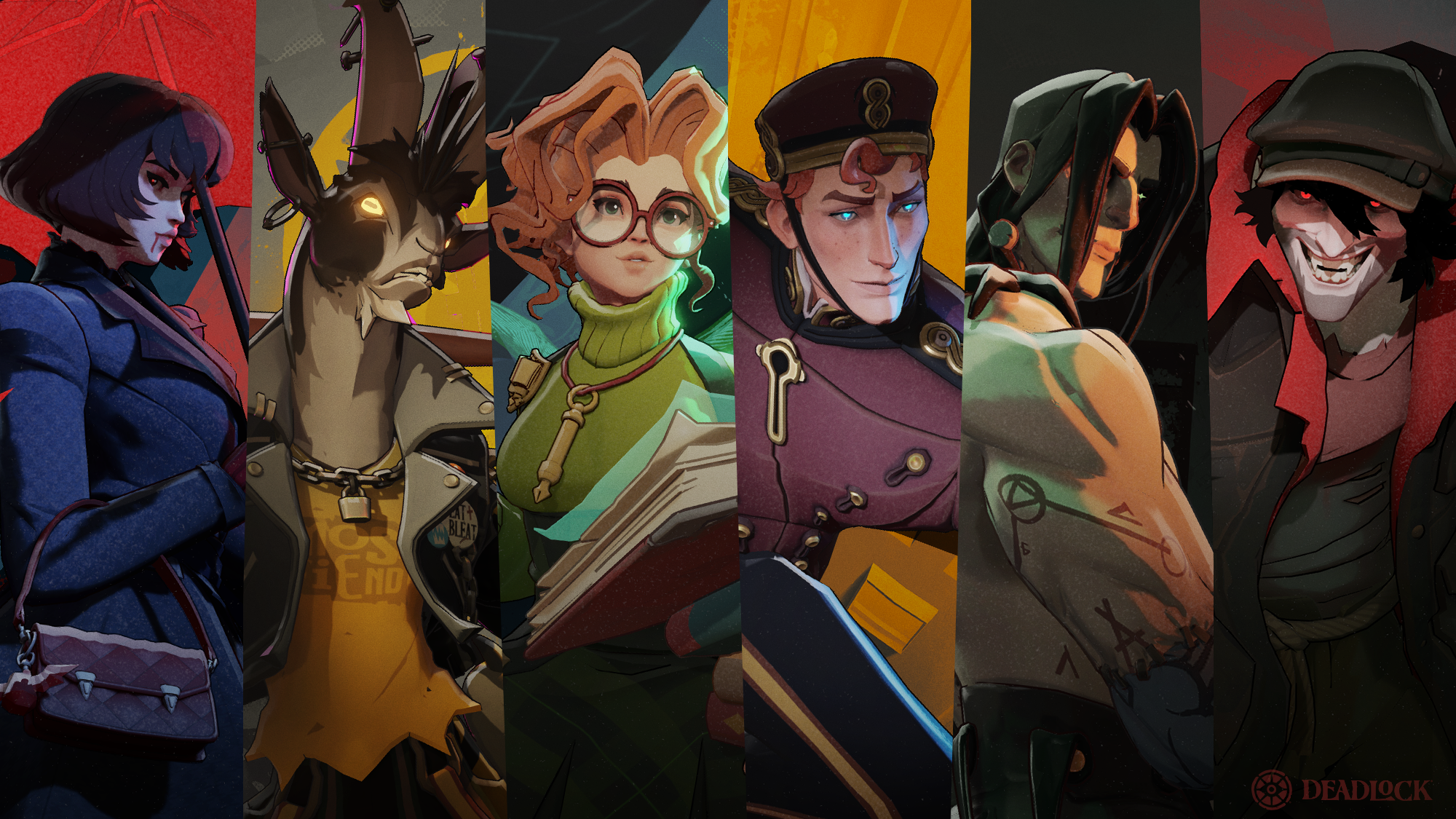
Other game characters in this genre, such as those in Overwatch and League of Legends (Arcane excluded), can often fall into the trap of feeling more like Pokémon than people. Their designs are incredible. And yes, they have lore and have clearly been through shit. But it’s not normal people shit.
Let's go through some examples. Wraith from Apex Legends was a science experiment and was essentially tortured until she became insane. Winston is a sentient monkey who grew up in space, then came back to Earth and built the Avengers. Ashe from League was “gifted with an ancestral connection to the magic of her lands, and the rare ability to wield the power of True Ice.” (Pulled from League's official website) Her mom also died.
Abrams from Deadlock is an alcoholic detective given a magic book whose car keeps getting firebombed. Mina is a trust fund kid whose parents paid for her to become a vampire. Vyper is a psycho knife wielder lacking serious boundaries. The Broker is a Celtics fan.
These types of characters are very different. The former are clean. They are flawed, yes, but their flaws are somewhat ephemeral, mostly created by the machinations of incomprehensible in-world politics or forces of magic and tech. By contrast, Deadlock's characters feel rooted, even though they are beings imbued with Occult and magical powers. There’s nothing inherently wrong with the clean approach; Marvel used that formula to make over $35 billion at the box office, but I think the latter is much stronger, and Deadlock proves that is achievable in the gaming medium.
Deadlock's reality-tethered cast is a refreshing glass of water in a desert of games featuring characters buffed down to a showroom finish, even if they’re villains. At the same time though, Deadlock's characters don’t slip into overly grim territory; they remain almost playful despite themselves. Lord knows we have enough depressing gray-brown-tinted games out right now.
Chapter 2: Takeaways for character building.
I think Deadlock provides excellent templates for creating and drafting compelling characters, especially in fantastical settings. So here are a few notepad or sticky-note-level principles I pulled from them.
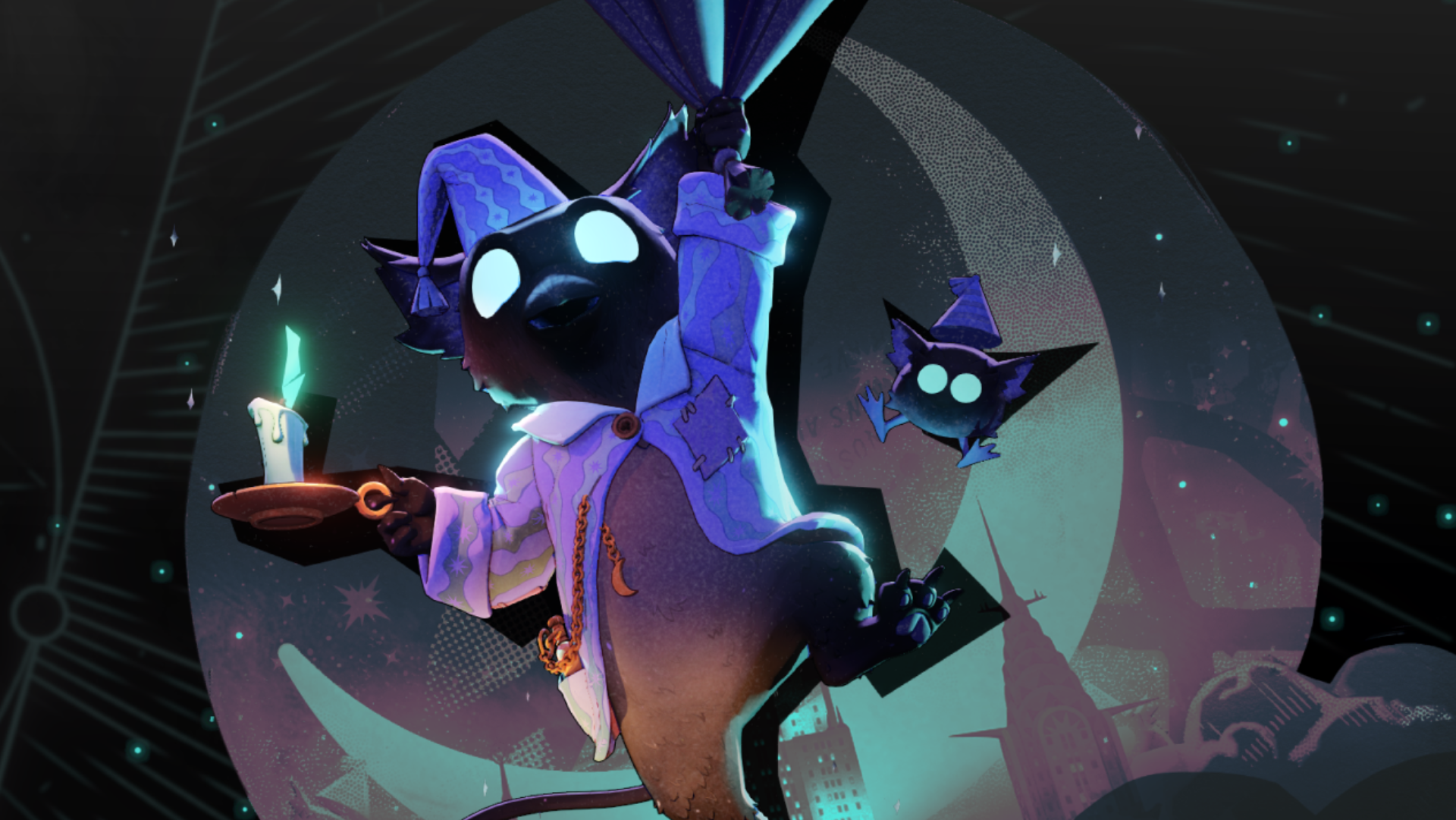
Characters do not need to be special.
They can be, but they don’t have to be. In a sea of the exceptional, sometimes it’s the mundane that stands out.
If the character is special, it’s good to give them at least one grounding flaw.
Or a day job. Or a specific aspect that roots them. Even Doorman, a powerful and evil entity, has a quirk that tethers him more than he otherwise would be. He’s a doorman, and he really loves his job.
Dirty it up.
Make characters rough-and-tumble. Resist the urge to sand down their edges.
Have fun.
Good rule for real life, too. But this mostly applies to creating kick-ass characters. In hindsight, I probably should have made this the last rule.
Great characters are born of an interesting world.
If the world you're operating in, real or fantasy, is unique, much of your character creation work will be done for you.
Write good flavor text.
Less of a character creation rule and more something I’m passionate about.
Characters are more than their backstory.
What flavor of ice cream do they like? What sports team do they root for?
Conflicts should be interpersonal where possible.
More on this later.
This character thought process doesn’t just apply to hero shooters; it can be used in RPGs, books, movies, anything. Geralt is a witcher and part of many grand political events. But that is grounded in his attitude: he's a guy just doing his job, with a general wry world-weariness. The new James Bond is another good example, as are Yennefer, Tali, and Kratos, just to name a few.
That said, good characters don’t really matter if you can’t communicate them. Unlike RPGs, Hero games need to be much more economical in their approach to that communication. So let's talk about how Deadlock does it.
Chapter 3: Ambient Dialogue and Barks
Deadlock’s ambient banter and barks are fantastic. While writing this script, the game added a feature that lets you listen to ambient conversations. And I am begging you: if you have even a passing interest in game writing, or, hell, writing at all, LISTEN TO THESE. They are a masterclass in economical character dialogue, conflict, and banter.
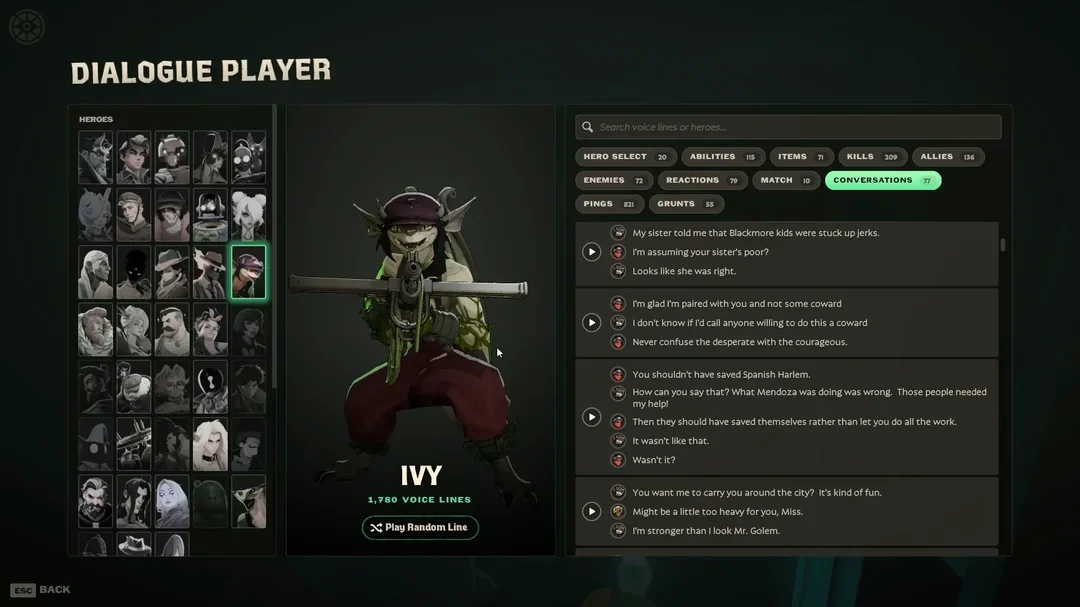
Much of this is just good instinct from their writers, who consistently deliver engrossing dialogue at a high level. Understanding instinct is beyond the scope of this blog, but suffice it to say: the dialogue feels natural and unforced, avoiding the “anyways about the—” and other lines often used to wrangle a conversation back on its intended track. Further, they use their unique character voices to great advantage, ping-ponging them off one another in a way that would make professional table tennis players envious. They don’t use fully naturalistic writing, but it certainly plays in that pool at times.
They also don’t often address the room's elephant like the characters in other games do. This goes back to point 8 in chapter 2. Their conversations are more small-talk-y and less “Why did you kill my father?” I am sometimes reminded of the Royale with cheese scene from Pulp Fiction, where we watch two killers talk about something as uninteresting and nominal as what you call a Quarter Pounder and Big Mac in France. Yes, they are killers, but they still eat. And because of that normalcy, the conversation becomes interesting again.

No moment is too small for them to do character work in this game. Here’s just one example: Vyper has a one-sided romance/obsession with Lash. When a friendly Vyper is killed, Lash will say: “They took out Vyper! Thank God... “
And when Vyper kills Lash, she will say. “He’s awesome even when he dies.”
These are six words each and do a great job of pulling on specific character relationships without hammering you over the head with them, leaving room for vital subtext to flourish.
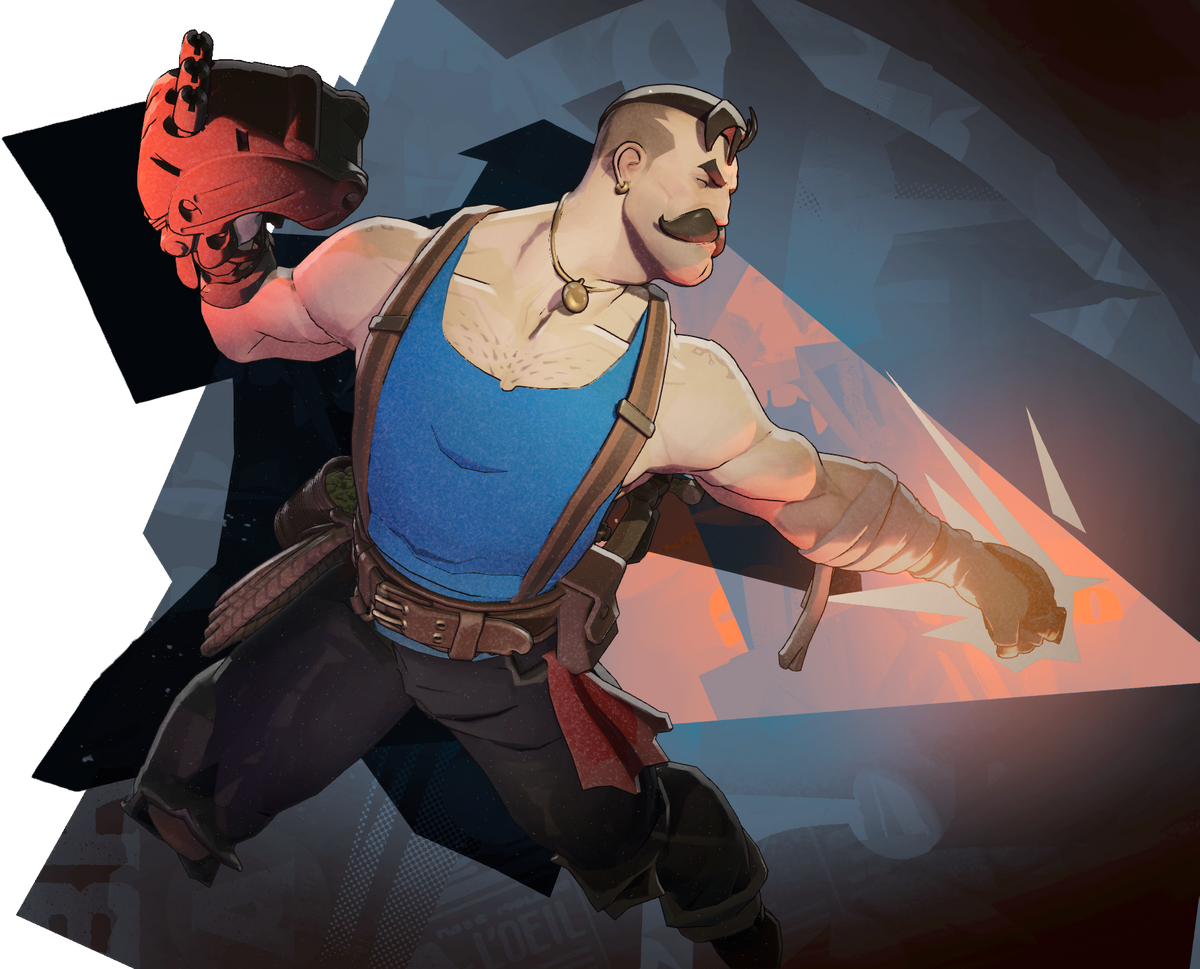
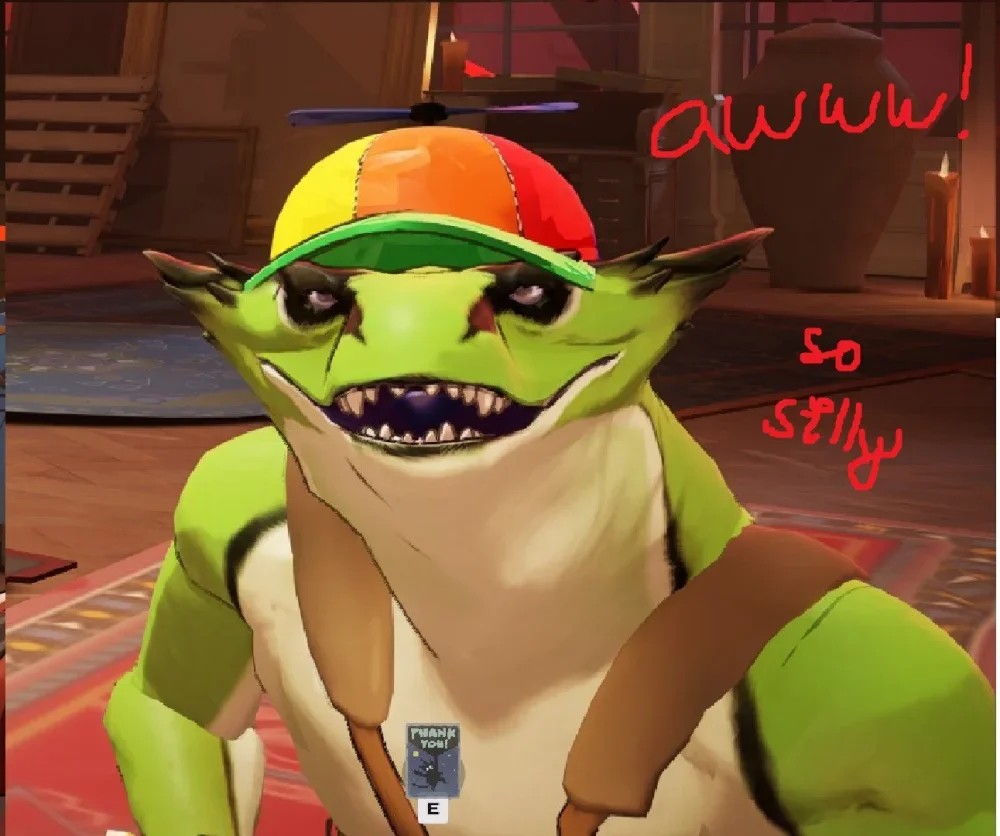
I would be neglectful not to mention that their frankly incredible casting choices bolster all of this. Vyper and Venator are among my favorites, but top to bottom it is excellent. And I wouldn't be surprised if the actors were encouraged to ad-lib some lines to make the dialogue feel more natural.
While this praise goes beyond writing specifically, I believe Casting and VO direction are important parts of a game's writing; they often matter more to the writing's perceived quality than the words themselves, not to mention actors' ability to riff in scenes. Also, as a minor aside, it is nice to play a game where the foreign character, Yamato, speaks with a heavy accent and in her native language. I have no idea why so many foreign characters in other games speak with American or British accents, and I’ve always found it a little jarring.
In case you are reading at 2x speed, here are my takeaways:
Be good at writing.
Write the small, unimportant conversations, not just plot stuff.
There’s no line too small to be void of character.
Have great VA’s and direction.
Alright, now let's talk about my favorite part, flavor text.
Chapter 4: Putting the Flavor in Flavor Text
Flavor text is often the most overlooked part of a game, with the exception of FromSoftware who use it to tell their entire story. This afterthought treatment of flavor text makes sense; its main job is to give the player basic information, not necessarily to entertain, but Deadlock does both.
Deadlock's flavor text lives mostly in the Character backstories section of the selection screen, which you can access by clicking this teeny tiny little icon in the bottom corner when a character is highlighted. It’s a shame it’s so hidden, because I think it’s fantastic writing.
I would describe these as dry and clever, two qualities lacking in most modern-day fantasy writing. Achieving those qualities is doubly impressive given how much exposition is packed into each description, further proving my long-held theory that exposition is not the enemy; it’s bad exposition that people need to worry about.
Here’s Abrams’ opening line: Hard-hitting, hard-headed, and hard-drinking; “Detective Abrams has been a fixture on the New York investigating scene for years.”
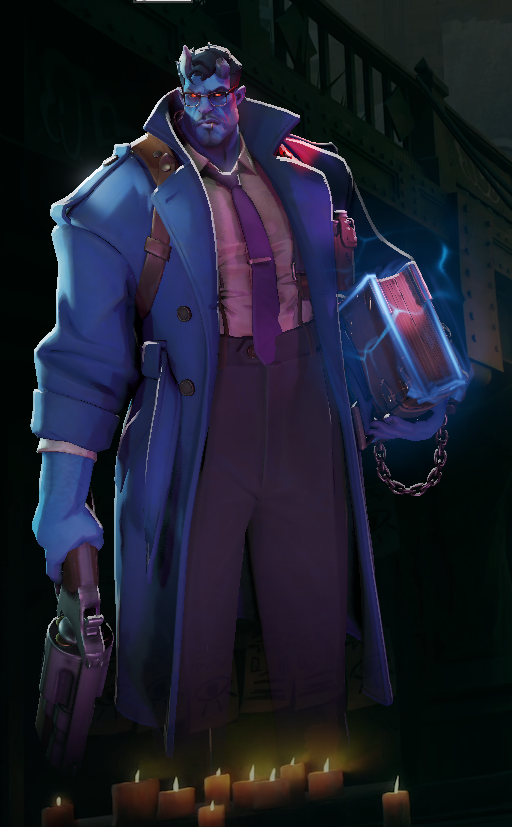
Hell yeah. Sign me up for that tie-in novel.
Here’s another:
“Mina Ha had it all...rich parents, elite education, and an arranged marriage that would see her ascend from run-of-the-mill upper class to American royalty. She was happy.”
Here’s more from the same description.
“It took a small fortune, but eventually they found a vampire who was willing to turn her. Unsurprisingly, Mina thought the idea of eternal youth and a trust fund was an acceptable plan B and happily agreed to the proposal.”
I mean, this is phenomenal work. It’s hard to analyze because writing like this either has the juice or it doesn’t. And this writing definitively has the juice. It lets a strong voice come through, whereas most flavor text opts for a more wiki-article or tech writing tone.
It’s not just witty and wry humor either; let’s take a look at Venator’s backstory:
“The Venators of St. Benedict are a Vatican-sanctioned order… Few in number, their modus operandi is to observe, identify, and exterminate. They are methodical, they are precise, and once they identify a threat to the flock they are relentless.
[Venator is] A man whose hardened heart has allowed him to pay terrible prices in the name of the greater good…”
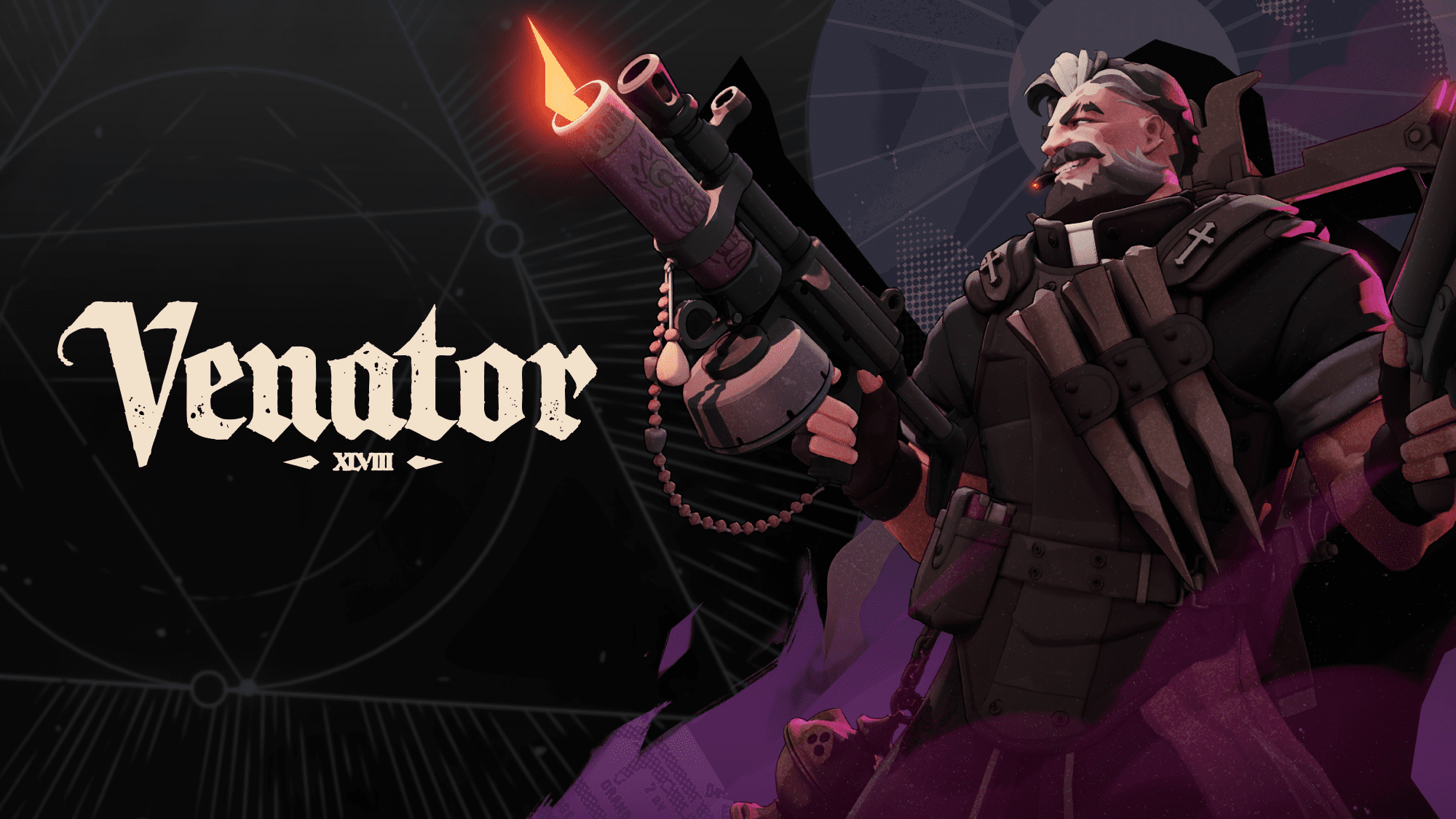
My favorite type of writing is the sort where each sentence feels like a joy to unfurl, and I think these descriptions do that impeccably well. More than anything, what Deadlock proves is that flavor text need not be boring. It can have great personality and joy, or a stern grimness throughout.
Here are three things I think myself and other writers can take away:
Voice should be allowed and encouraged in flavor text.
If it’s not interesting enough to enjoy reading, it’s probably not worth writing.
Be good at writing.
Oh, and Yamato’s all-Japanese backstory is a fantastic touch. I main Yamato if you can't tell.
Chapter 4.5: An imaginative World
I want to take a moment before the blogs end to talk about the game's world. As I noted in chapter 2, these characters cannot exist without the brilliance of the world they were born of. The world of Deadlock, with its occult events, its magi-fication of the Bermuda Triangle, and its transformation of the Big Apple into the Cursed Apple, cannot be undersold.
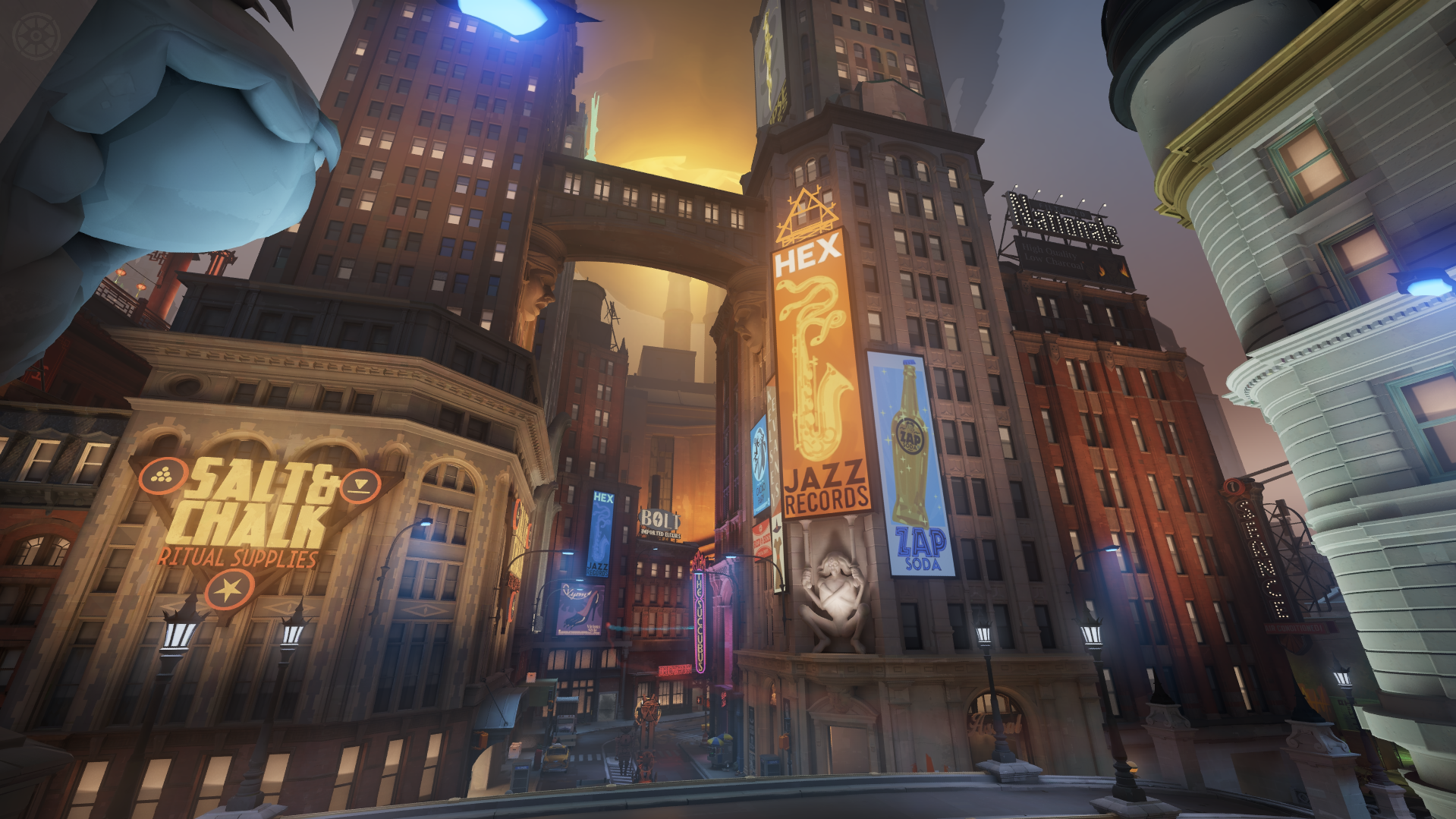
You can play as a dead, vengeful witch or not-witch from Salem holding a sniper rifle. If you don't think that’s the coolest shit ever, we would have sat at different lunch tables.
Interestingly, Deadlock was initially called “Neon Prime,” which was the same gameplay in a sci-fi setting. But playtesting led them to rebuild the setting from the ground up and create one of the coolest, most unique worlds in games. This also explains Yamato's massive forehead. If anyone from Valve reads this, please, I beg you, re-model her.
Epilouge
I’m sure that, without its flavor text, its barks, and its character work, Deadlock would remain very popular for its well-thought-out core design. Still, the game has put great care into its writing, and even if I truly suck at laning, farming, and just about everything else to do with winning a game, its world, characters, and their cleverness will keep me coming back and feeding the enemy team for many patches to come. Much to my teammates' disappointment. Thanks for reading.
-Sam